
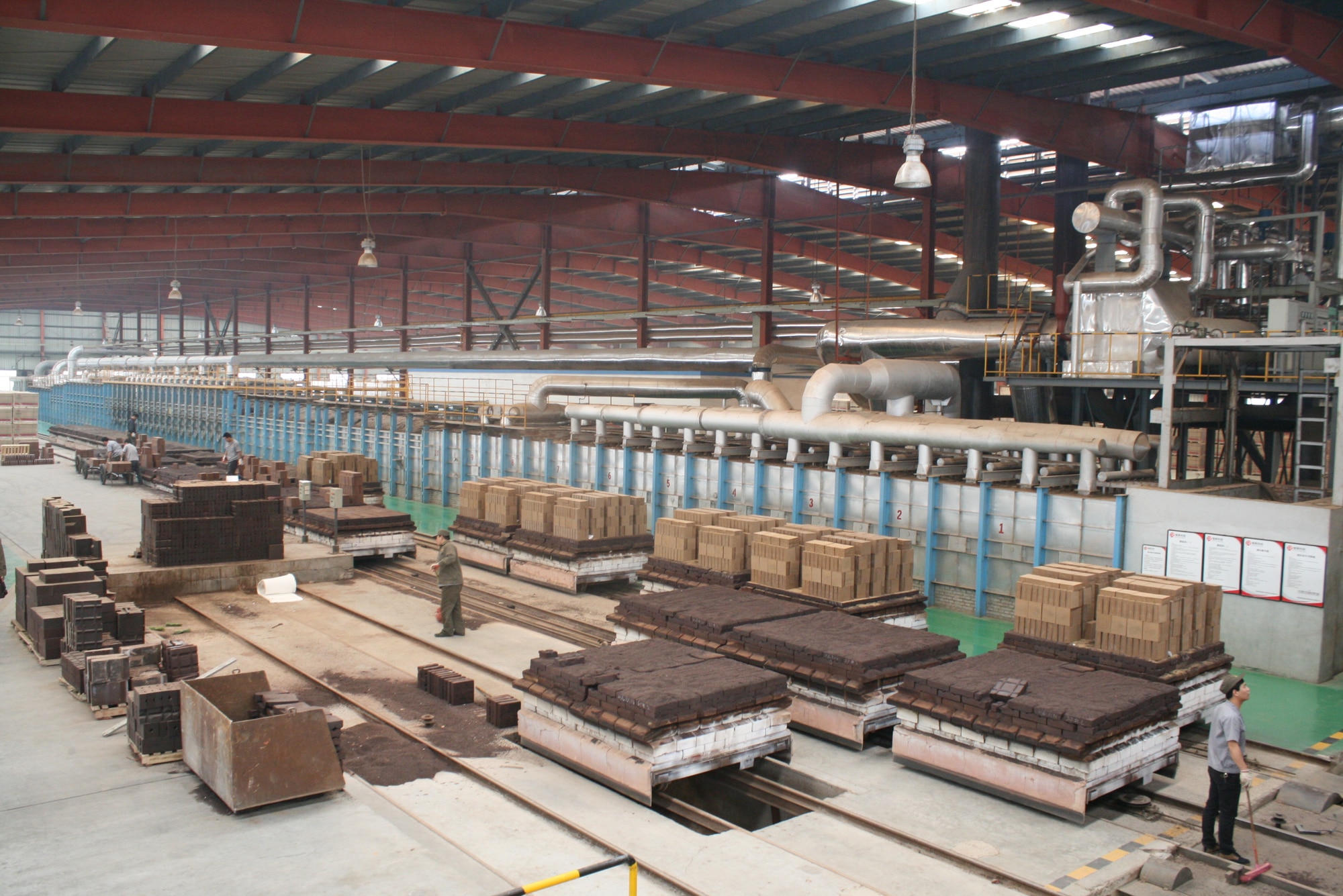
General product and buying guidance. You can contact us before preparing a complete specification; the final grade and supply scope are discussed for your requirement.
They are separate material options
Magnesia–alumina spinel and silicon mullite bricks are presented as separate product families in the current catalogue. A familiar name or a higher-looking grade number does not make one a direct substitute for the other. Start by identifying the kiln zone and the current material rather than selecting a replacement from a product photo.
Compare the lining conditions first
For the selected zone, describe coating behaviour, process exposure, dust or abrasion and the pattern of thermal cycling. Note visible wear and any operating changes. These inputs help frame a technical comparison without assuming that a product used successfully in one position will behave the same way in another.
Read catalogue values under their stated conditions
The site lists MA-S80 and MA-S85 variants under the RTMAL entry, and GM-1650 and GM-1680 under RTGM. Compare their reference values alongside the property name, unit and available test condition. Refractoriness under load is not the same property as a continuous operating-temperature limit. A grade name is not a service-life promise.
Check whether the proposed shape actually fits
A replacement brick must fit the planned lining arrangement. Compare straight or wedge shapes, relevant dimensions and tolerances, the number of bricks and joint details. Existing drawings or marked bricks are useful starting points. Do not turn a material comparison into an order until the required geometry is clear.
Prepare a side-by-side enquiry
Ask the supplier to identify the proposed product and catalogue variant, application position, brick dimensions, quantity basis and document set. Separate the material price from other requested items such as mortar, special shapes or installation support. This makes quotations easier to compare without asking for every project detail in the first message.
When the existing grade is unknown
Send clear photos of the brick, any visible marking, the damaged area and the equipment position. Say what information is missing. The team can begin with the available material, then confirm identification and measurements during follow-up. Do not infer an exact composition, certification or remaining life from appearance.